

Colleges Accepting 2.5 to 2.8 GPA: Your Best Options
Hitting the final years of high school with a cumulative average between an 80% and an 83% means your unweighted score sits right in the C+ territory. If you are looking at top-tier elite institutions, that range might feel discouraging.
The reality is that colleges accepting a 2.5 to 2.8 GPA are numbered in the hundreds across the country. A lower numbers score does not lock you out of a traditional four-year higher education experience.
This guide skips the generic fluff and directly maps out your most realistic options, how admissions teams view your profile, and the tactical choices you can make right now to lock in an acceptance letter.
Understanding Where a 2.5 to 2.8 GPA Stands
Related reading: Check out our guide on How to Apply for Gates Cambridge Scholarship
An unweighted academic standing between 2.5 and 2.8 indicates that you earned consistent passing grades, likely a steady mix of Cs and Bs throughout your high school career. While this is below the national average for college-bound seniors, it proves to admissions boards that you can handle standard core classroom curricula.
 An academic transcript showing grades that line up with a C plus average.
The key to a successful college search in this range is understanding institutional selectivity. You simply need to focus your energy on institutions that use a flexible approach to look at your entire profile rather than those that use automated GPA cutoffs to filter out applications.
Top University Types Available in This Bracket
When building your target list, you will find excellent options across several distinct institutional categories. These schools balance reasonable entry bars with strong career outcomes.
 Exterior view of a regional state university campus building.
1. Regional Public State Universities
Many regional state schools are explicitly designed to serve a broad student base. They often look for steady progress rather than a flawless academic record.
-
Examples: California State University (various regional campuses), Eastern Michigan University, Colorado State University-Pueblo, and Nevada State University.
Why they fit: These institutions frequently feature open or generous acceptance percentages for in-state applicants hovering around the 2.5 threshold.
2. Liberal Arts Colleges with Holistic Admissions
Private liberal arts colleges often have smaller class sizes and take the time to evaluate the human behind the numbers.
-
Examples: Beacon College, New England College, and various regional private schools.
Why they fit: They prioritize your personal essay, letters of recommendation, and community involvement over raw numerical metrics.
Actionable Application Strategies to Maximize Your Odds
To stand out when applying to colleges accepting a 2.5 to 2.8 GPA, you cannot rely on your transcript alone to do the heavy lifting. You must build a compelling narrative around your performance.
 A college application essay and personal statement draft open on a workspace desk.
-
Win With a Strong Upward Trend: Admissions counselors look at the direction your grades are moving. If you struggled during your freshman year but pulled straight Bs during your junior and senior years, highlight this improvement in your essays. It shows personal growth and maturity.
Ace Your Standardized Tests: If your target school is test-optional but allows submissions, a high SAT or ACT score can offset a lower grade average. A solid score proves you have the core academic capability to handle college-level work.
Leverage the "Additional Information" Box: Use the common application's extra text space to explain any unusual anomalies, such as long illnesses, family disruptions, or financial hardships that directly pulled down your sophomore or junior scores.
The "Hidden Door" Strategy: The 2+2 Pathway
If your dream university requires a 3.5 minimum average and won't budge, do not panic. The smartest alternative route available to any student today is the 2+2 Community College Transfer Pathway.
By enrolling in a local two-year community college first, you get a clean slate. You can complete your general education requirements at a fraction of the price.
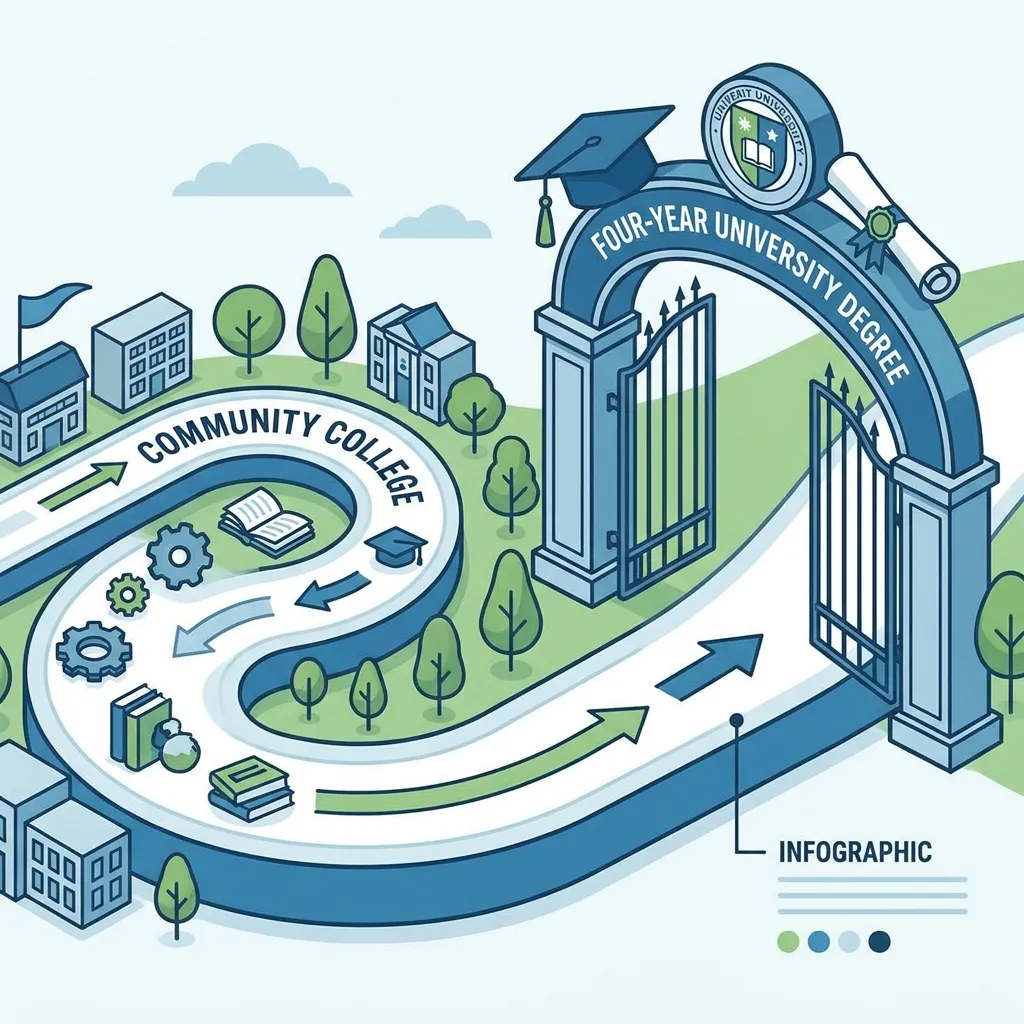 A visual infographic of the transfer route from community college to university.
Once you earn your Associate degree with a refreshed, higher college GPA, you can utilize guaranteed state articulation agreements to transfer directly into a major four-year public university as a junior. At that stage, your high school grades no longer matter to the admissions office.
Strategic Recommendations for Students
Your unweighted academic standing is a metric of your past, not a limit on your future. Focus your time on locating institutions that emphasize holistic review processes. Write a personal statement that emphasizes your work ethic, secure glowing recommendation letters from teachers who can speak to your character, and consider the community college gateway if you need a structural financial or academic reset.
Frequently Asked Questions
Yes. Federal financial aid programs (FAFSA) are based entirely on financial need, not your high school academic performance. However, top-tier institutional merit scholarships usually require higher averages, so you may need to look at local or private scholarship options.
If both your high school grades and your standardized test scores are below average, it is wiser to apply to test-optional institutions. This keeps the admissions focus entirely on your personal statement, extracurricular profile, and letters of recommendation.
An unweighted score looks purely at your raw numerical performance out of 4.0. A weighted score gives extra value to advanced placement tracks. If your 2.5 score is weighted despite taking difficult honors courses, colleges will respect the rigor of your schedule.
Yes, many major accredited online universities feature flexible enrollment frameworks. These options are ideal for students who require non-traditional schedules or want to complete foundational coursework from home.
If your target four-year state schools reject your application, or if you face massive out-of-state tuition bills, starting at a community college is your best strategic option. It saves money and resets your academic record for your future applications.