
5 Habits That Actually Raise Your GPA (Research-Backed)
Academic success is often misunderstood as a game of endurance. Many students fall into the "effort trap"—spending twelve hours in the library, consuming endless caffeine, and sacrificing sleep, only to see their grades stagnate. The truth is that high academic achievement is not determined by how much you study, but by how you process information.
If you want to raise your GPA, you have to stop treating your brain like a storage unit and start treating it like a muscle. To move from a 3.0 to a 4.0, you don't necessarily need more hours; you need better cognitive strategies. Based on cognitive science and educational psychology, here is a deep dive into the five habits that actually move the needle.
The Illusion of Competence: Why Hard Work Fails
Related reading: Check out our guide on How to Apply for Gates Cambridge Scholarship
Before implementing new habits, we must address the primary reason students fail despite studying hard: the "Illusion of Competence." This occurs when you read your notes or a textbook, find the information familiar, and mistake that familiarity for mastery.
Because the words are right in front of you, your brain assumes it "knows" them. However, "recognizing" information is a low-level cognitive task, while "recalling" it during an exam is high-level. To raise your GPA, you must shift your entire strategy from passive input (reading and highlighting) to active output (retrieval and application).
1. Prioritize Active Retrieval Over Passive Re-reading
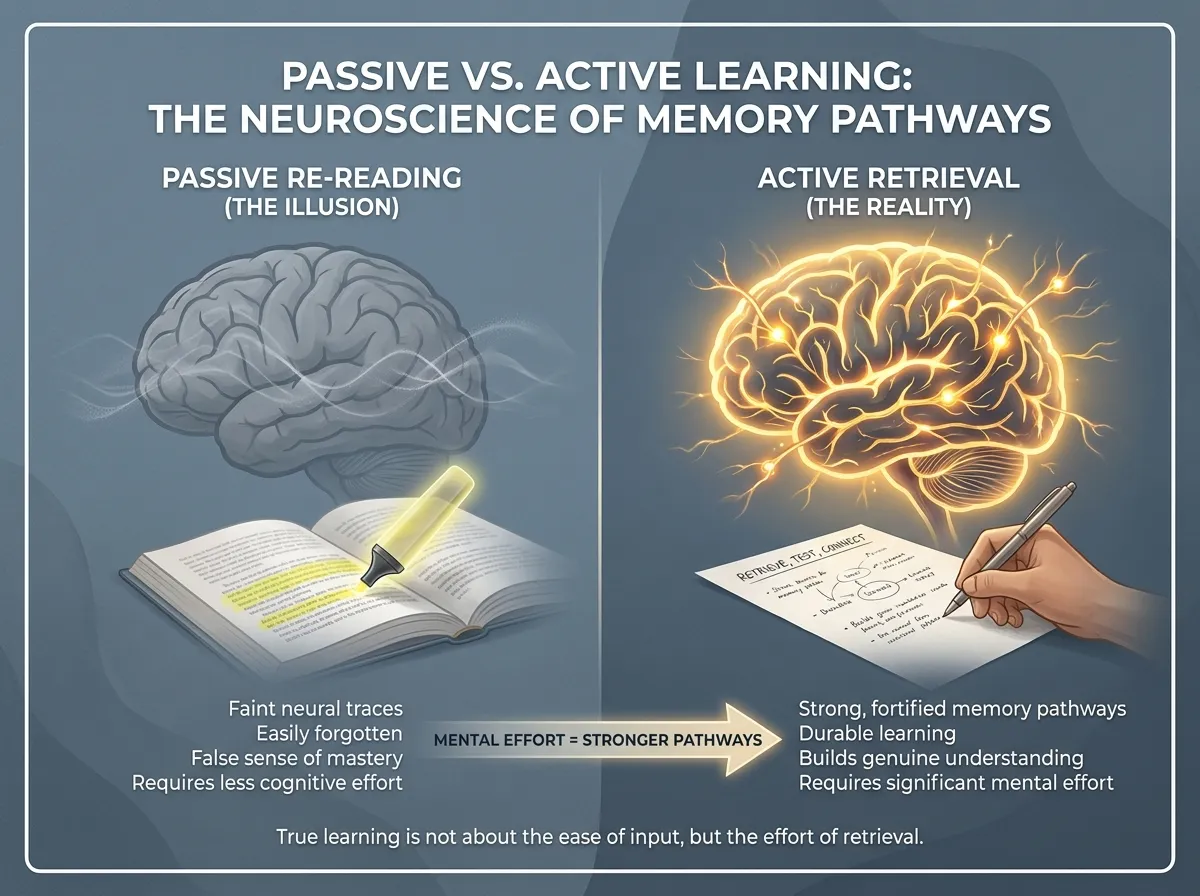
Re-reading textbooks is the most common study habit worldwide, yet research consistently shows it is one of the least effective. A landmark study by Dr. Jeffrey Karpicke published in Science demonstrated that students who practiced retrieval (testing themselves) retained 50% more information than those who used traditional study methods.
How to Implement Active Retrieval
Instead of looking at your notes, you must force your brain to generate the answer from scratch. This strengthens the neural pathways associated with that knowledge.
-
The "Blank Sheet" Method: After a lecture or reading a chapter, close everything. Take a blank sheet of paper and write down every single concept, formula, or date you can remember. Only then go back to fill in the gaps.
Flashcard Evolution: Move beyond simple definitions. Use flashcards to ask "Why" and "How" questions to build deeper connections.
Pro-Tip: Don’t wait until you feel "ready" to test yourself. The most effective retrieval happens when you are on the verge of forgetting. The mental struggle to remember is exactly what signals your brain to prioritize that information for long-term storage.
2. Leverage Spaced Repetition to Fight the Forgetting Curve
Cramming is the enemy of a high GPA. While it might help you pass a quiz tomorrow, it fails for midterms and finals because the information is stored in your short-term "working" memory. To raise your GPA across an entire semester, you must combat the "Forgetting Curve," a concept pioneered by Hermann Ebbinghaus.
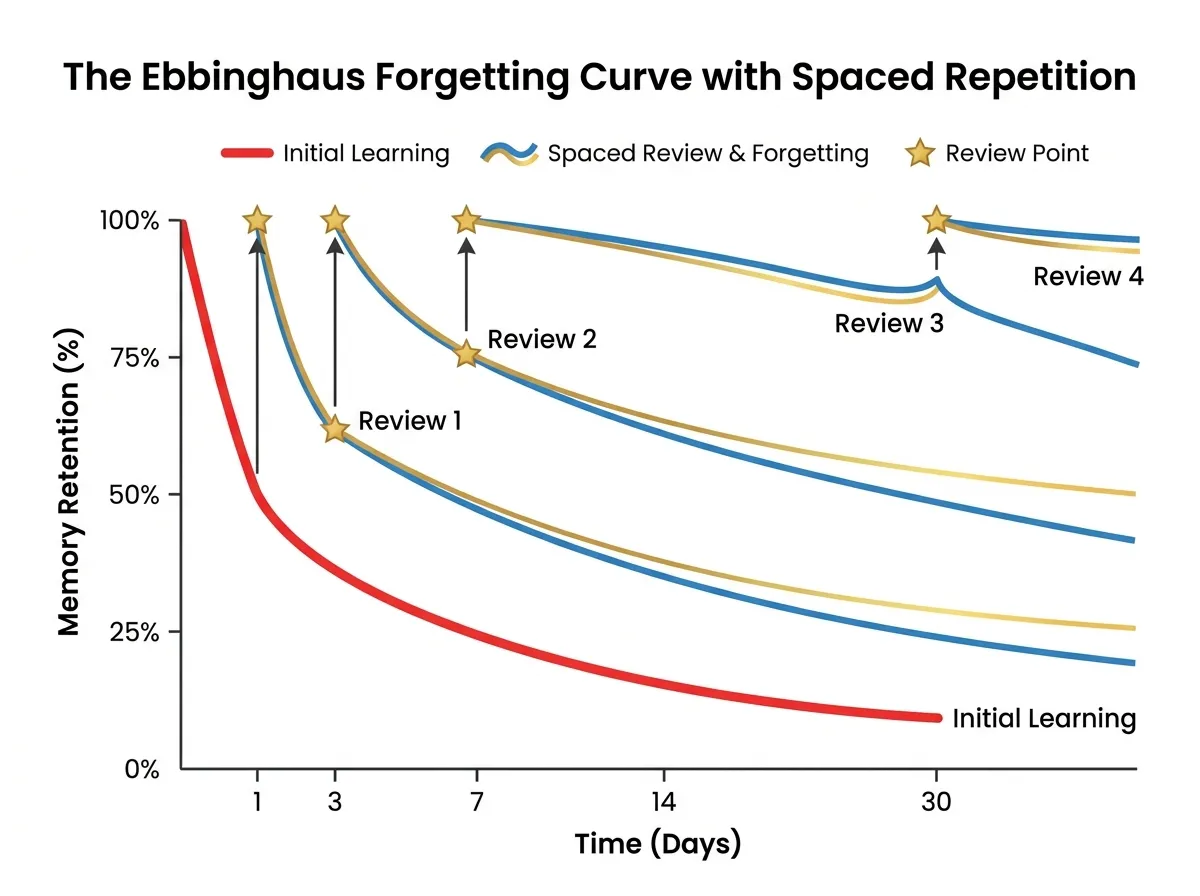
The curve shows that humans lose roughly 70% of new information within 24 hours if no review takes place.
The Science of Spaced Repetition
By reviewing material at increasing intervals (1 day, 3 days, 1 week, 1 month), you "reset" the forgetting curve. Each review makes the memory more durable.
-
The Habit: Create a "Review Calendar." Instead of studying Chapter 1 once and moving on, schedule a 10-minute review of Chapter 1 three days later.
Essential Tools: Use Anki or Quizlet. These platforms use Spaced Repetition Software (SRS) algorithms. They automatically show you the "hard" cards more frequently and hide the "easy" ones, maximizing your efficiency.
3. Implement "Interleaving" for Strategic Mastery
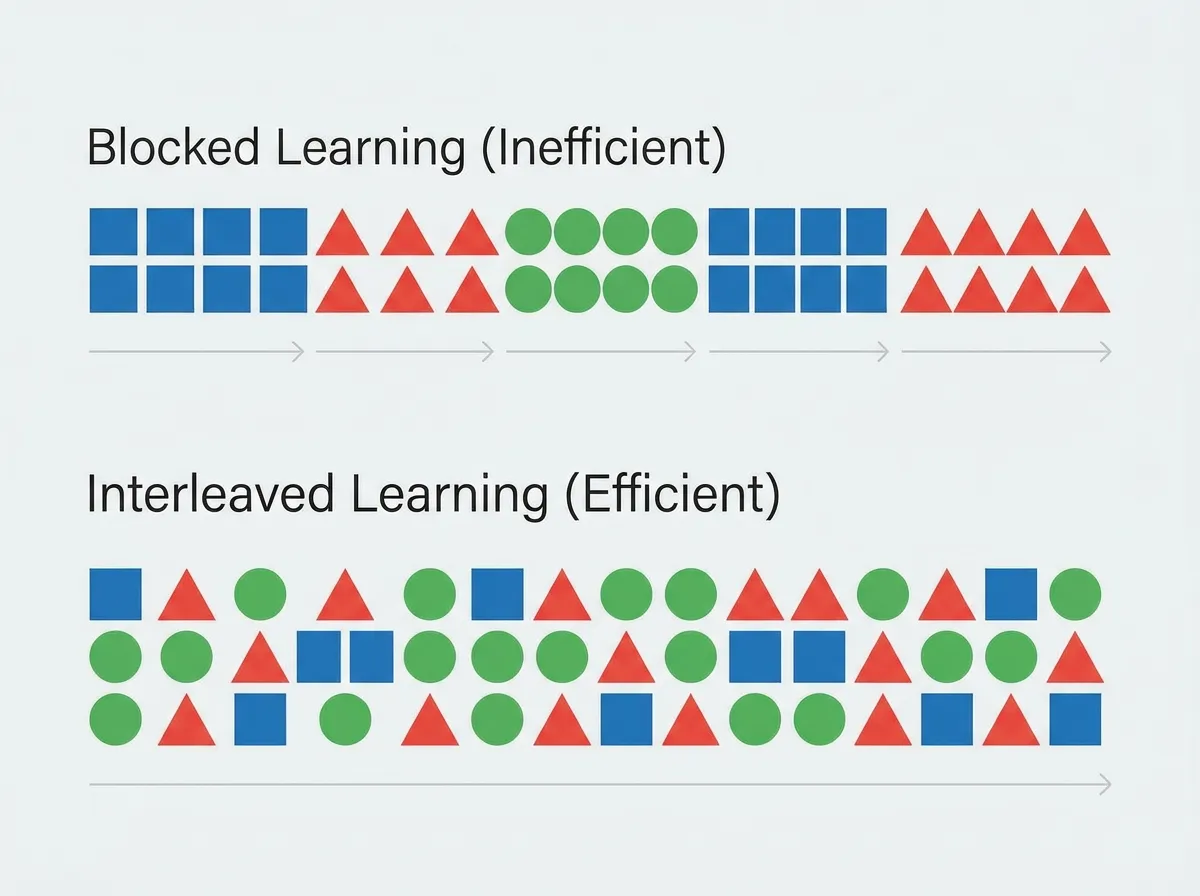
Most students practice "blocked learning"—studying all of Subject A, then all of Subject B. However, research suggests that interleaving—mixing different topics or types of problems within a single study session—leads to significantly higher exam scores.
Why Interleaving Works
In a blocked session, your brain gets into a "groove." If you do 20 calculus problems involving the "chain rule," your brain stops asking what rule to use and just applies it mechanically. On a real exam, problems are mixed. Interleaving prepares you for the "mix."
-
The Habit: If you have 2 hours to study, spend 30 minutes on Math, 30 on Biology, and then go back to Math.
Application in Problem Solving: Don't do 20 problems of the same type. Mix in five different types of equations. This forces your brain to constantly identify the type of problem before solving it, which is the exact skill needed to raise your GPA during high-stakes exams.
4. Utilize the "Protége Effect" (The Feynman Technique)
One of the fastest ways to raise your GPA is to stop acting like a student and start acting like an educator. The "Protégé Effect" is a psychological phenomenon where students who prepare to teach others end up understanding the material more deeply than those who just study for themselves.
Using the Feynman Technique
Named after Nobel Prize-winning physicist Richard Feynman, this technique focuses on radical simplicity.
-
Choose a Concept: Pick a topic you are struggling with.
Teach it to a Toddler: Explain the concept in plain English. Avoid using "jargon" or complex academic terms.
Identify the Gaps: When you can’t explain something simply, you’ve found a gap in your own understanding.
Review and Refine: Go back to your textbook, fix that specific gap, and try the explanation again.
Why it works: You cannot simplify what you do not truly understand. This method strips away the "Illusion of Competence" and forces total mastery.
5. Master the "Pre-Correction" Strategy
Most students look at their mistakes only after the graded exam is returned. To truly raise your GPA, you must shift your mistake-finding process to the beginning of the learning cycle.
The Power of Pre-Testing
Research in the journal Educational Psychology shows that taking a practice test before you even learn the material improves final exam performance. Even if you get every question wrong, the act of "guessing" primes your brain.
-
The Habit: Find a practice exam or the "Review Questions" at the end of a textbook chapter. Attempt them before you read the chapter or attend the lecture.
The Benefit: Pre-testing creates "mental hooks." When you finally hear the correct answer in class, your brain recognizes it as the solution to a problem it already encountered. You aren't just listening to a lecture; you are hunting for missing pieces of a puzzle.
The Unique Value: The "Sleep-Study-Sleep" Sandwich
While general advice often suggests "getting 8 hours of sleep," it rarely explains the tactical advantage of when you sleep. Cognitive scientists have discovered that sleep is the period when your hippocampus moves data to the long-term neocortex—a process called memory consolidation.
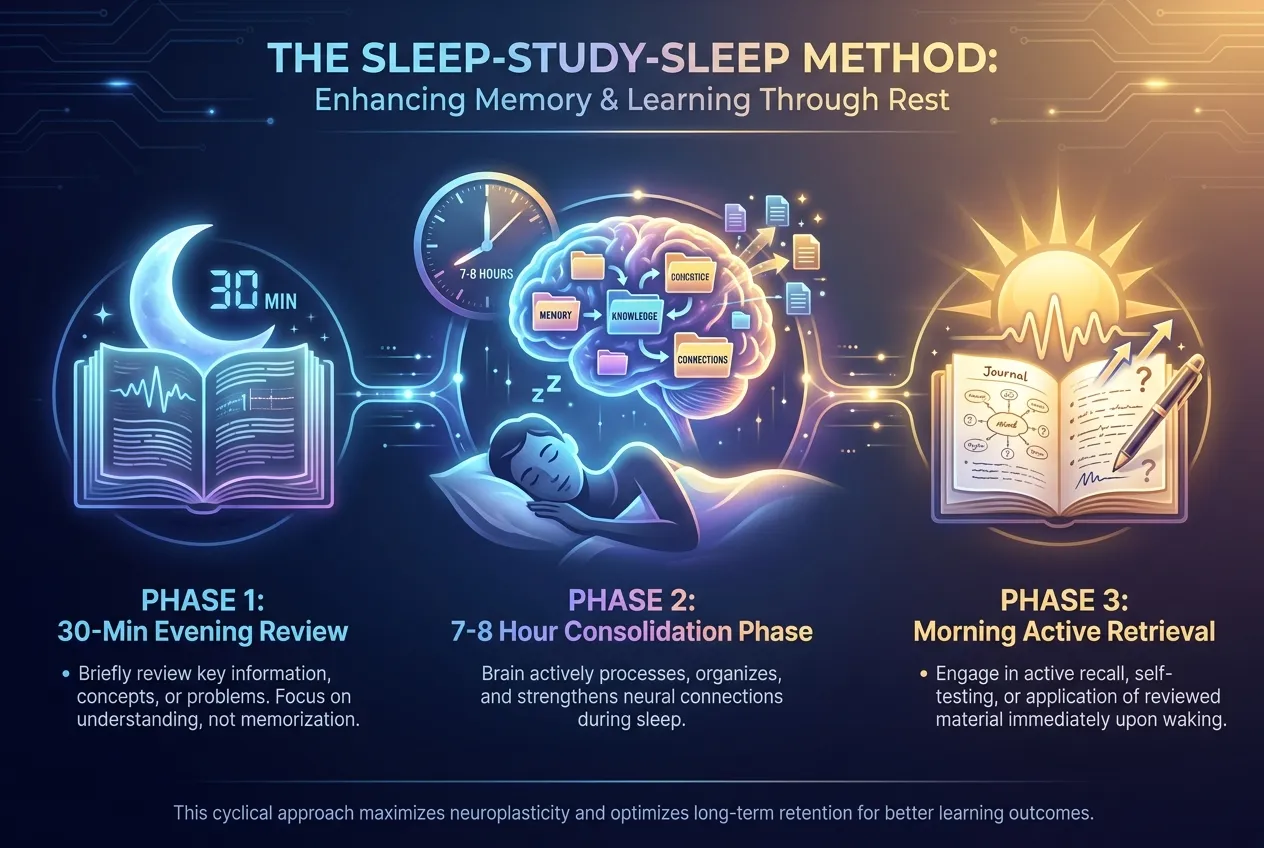
To raise your GPA using biology, use the "Sleep-Study-Sleep" sandwich:
-
Evening Review: Spend 30 minutes reviewing the most difficult concepts of the day right before you go to bed.
The Sleep Phase: Get 7-8 hours of sleep to allow the brain to "file" that information.
Morning Retrieval: Immediately upon waking, try to recall those same concepts without looking at your notes.
This technique utilizes the brain’s high plasticity levels during and after sleep, ensuring that the hardest material is the most deeply encoded.
Advanced Time Management: Deep Work vs. Shallow Work
To sustain these habits, you must manage your energy, not just your time. Cal Newport’s concept of "Deep Work" is essential for any student aiming to raise your GPA.
-
Shallow Work: Studying while checking your phone, listening to podcasts, or sitting in a noisy cafeteria. This creates "attention residue," where your brain is still thinking about the last notification instead of the chemistry formula.
Deep Work: 90-minute blocks of total isolation. No phone, no internet, just your brain and the task.
Research shows that two hours of Deep Work is more productive than eight hours of distracted studying.
The Bottom Line: Embracing Cognitive Friction
To raise your GPA, you must stop valuing "busy work" and start valuing "heavy lifting." Real learning is uncomfortable. If your study session feels easy, you are likely just skimming the surface. If it feels mentally taxing—if you feel the "strain" of trying to remember—you are making progress.
Expert Tip: Don't try to change all your habits at once. Choose one—such as Active Retrieval—and apply it to your most difficult subject for 14 days. Once you see your quiz scores rise, the data will provide all the motivation you need to adopt the rest.
Ready to calculate your progress? Use a GPA Calculator to track how these science-backed habits are impacting your semester goals in real-time.
Frequently Asked Questions
Re-reading creates an "Illusion of Competence." Recognizing familiar words is a low-level brain task, whereas exams require high-level active recall. Testing yourself is the only way to build reliable exam memory.
Humans naturally lose about 70% of new data within 24 hours. By reviewing material at expanding intervals (e.g., after 1 day, 3 days, 1 week), you reset the forgetting curve and push information into long-term memory.
Interleaving is the practice of mixing different topics or problem types within a single study block. It forces your brain to constantly figure out which rule or formula applies to a problem, which perfectly mirrors real exam conditions.
The Protégé Effect is a psychological phenomenon where preparing to teach a concept to someone else forces you to simplify the material. This process instantly exposes gaps in your own understanding.
You should aim for 90-minute blocks of complete isolation with zero phone notifications, music lyrics, or internet tabs open. Research shows that two hours of deep, hyper-focused work outputs more cognitive progress than eight hours of distracted studying.